SkillsPath: Leveraging AI to Unlock Green Career Pathways for Young Migrants
Since the start of 2025, SkillLab has been actively engaged in SkillsPath, a vital initiative co-funded by the European Union to foster inclusive labor markets. Despite low overall EU unemployment, migrants face a significantly tougher situation. Their average unemployment rate stands at 12.8%, starkly contrasting with the 5.5% experienced by native-born populations. This disparity is even more pronounced in some regions, such as Spain (20.3% vs. 11.6%), Greece (19% vs. 12%), and Germany, where non-EU nationals' unemployment is over three times the national average (Eurostat, 2023). These unemployment rates are also influenced by the proportion of young people (15-19 years old) who are not engaged in employment, education, or training (NEET). In 2022, 11.7% of individuals aged 15-29 in the EU were classified as NEETs. This figure varies across member states, with Germany reporting a lower rate of 8.6%, while Greece and Spain experienced higher percentages at 15.4% and 12.7%, respectively.
Led by the the International Rescue Committee (IRC) Germany in collaboration with 3s, IRC Hellas, FAMSI, Inserta Andalucía and MDAT S.A., SkillsPath directly addresses this challenge by supporting young refugee and migrant NEETs across these three countries. The project goes beyond traditional employment support by aiming to integrate these young people into sustainable career pathways—particularly within the emerging green transition—through a powerful combination of personalized coaching and social innovation.
SkillLab’s involvement is rooted in our core mission to ensure no skill goes unrecognized. In the SkillsPath project, our AI-based solution serves as a key technological pillar, empowering participants to articulate their diverse skill sets and instantly match them to real-time local labor market needs based on the ESCO framework. By embedding our technology into this holistic service model, we aim to help youth recognize their own potential but also enable employment service providers to deliver more data-driven, personalized, and scalable guidance.
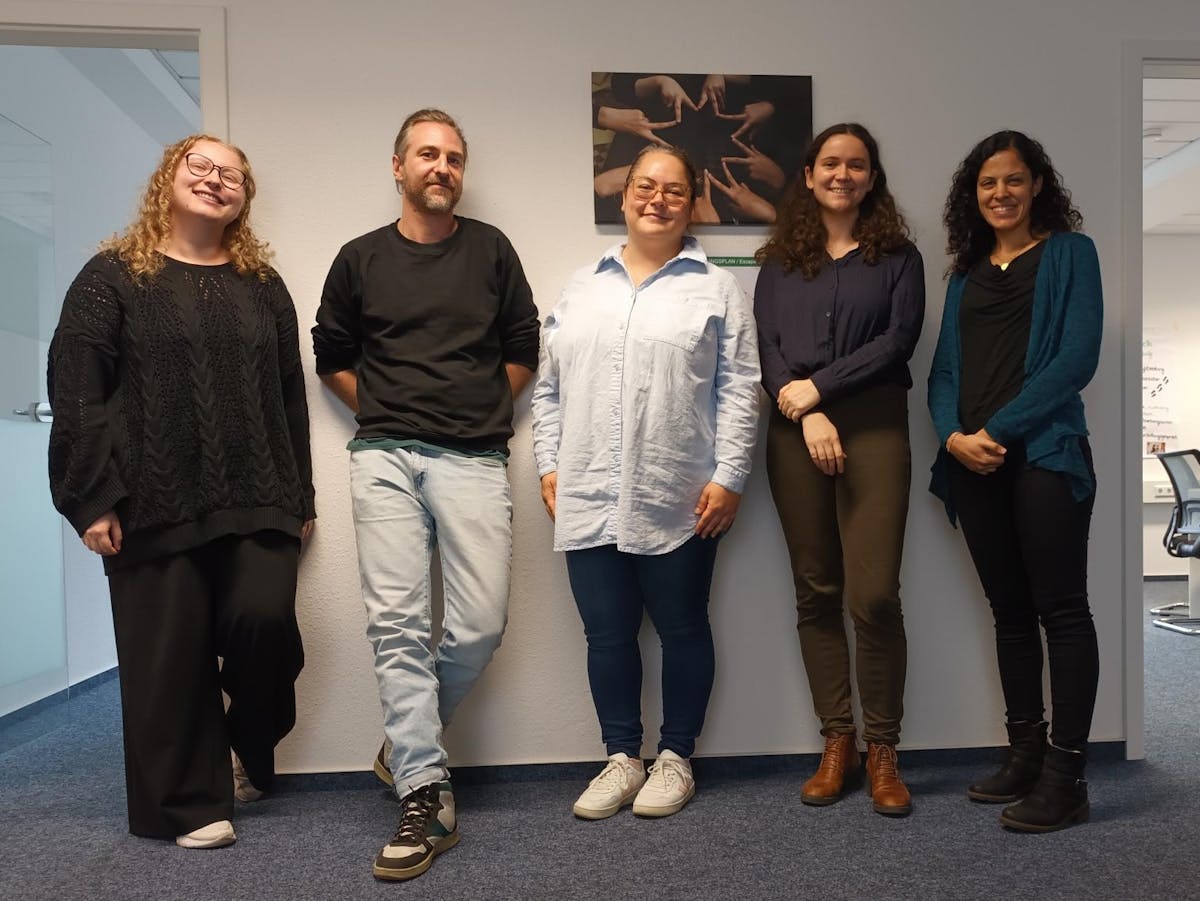
SkillsPath team during the "Training of Trainers" session for the pilot implementation in Germany.
Tailoring Technology to Local Green Economies
A generic approach does not work when addressing specific target groups and local labor market needs. To bridge this gap, SkillsPath focused on localizing one of SkillLab’s AI tools for its pilot regions: North Rhine-Westphalia (Germany), Thessaloniki (Greece), and Andalusia (Spain). This process centered on adapting the ESCO (European Skills, Competences, Qualifications and Occupations) taxonomy to better reflect local realities.
ESCO acts as a comprehensive, multilingual dictionary for the European labor market, classifying over 3,000 occupations and nearly 14,000 associated skills. By providing a standardized "common language," it helps our technology match job seekers with occupations based on their skills and suggest relevant training. However, ESCO can have limitations, such as varying quality in national language translations, a lack of focus on transversal skills, the intransparency of mobility paths between occupations, and sometimes overly granular or overlapping skill concepts.
To effectively support young refugee and migrant NEETs in Germany, Greece, and Spain, the ESCO taxonomy requires localization. This ensures alignment with regional needs and project goals, as many ESCO occupations may not be relevant to the target group or specific regions. Additionally, key areas such as green jobs, entry-level positions, and career pathways are not immediately clear within the standard ESCO framework. Existing national language labels for occupations and skills may also be insufficient for the target audience, requiring further refinement.
Working closely with our partners, we addressed this problem by employing a targeted localisation strategy. This strategy involved:
- Narrowing scope: Focusing on occupations most relevant to the target group, such as entry-level roles with lower language requirements.
- Improving visibility: Highlighting in-demand and "green" jobs, as well as clarifying career progression pathways.
- Refining language: Enhancing national language labels by drawing from regional taxonomies to ensure clarity and relevance.
Hence, we are not just doing translation; we are developing specialized editors to ensure that when a young person in Thessaloniki or Bonn uses our solution, the career paths they see—especially those in green sectors—are relevant, realistic, and available in their immediate area.
Through dedicated workshops and training sessions, partners were then trained to use the taxonomy editor to make these critical adjustments directly within the tool. This hands-on approach empowered them to hide irrelevant career fields, tag occupations to increase their visibility, and better align the tool with their specific local contexts. The result is a skills-based platform equipped with career information that reflects the most current labor market situation in the implementation region and is tailored to the project and target group’s needs.

SkillLab team trains the partners in Andalusia, Spain.
Empowering Counselors with "AI + Human" Support
Technology is most effective when it amplifies human potential. In SkillsPath, our tools are not replacing career counselors; it is giving them a head start. By allowing youth to complete comprehensive skills assessments independently, we enable counselors at IRC Germany, IRC Hellas, Inserta Andalucía and FAMSI to skip the tedious administrative intake and move directly to high-value, personalized career coaching.
To ensure this integration is seamless, SkillLab conducts on-site "Training of Trainers" sessions and supports the partners in facilitating "User Journey Design Labs" in Bonn, Thessaloniki, and Andalusia. These collaborative sessions allow us to co-create the exact service flow with local stakeholders, ensuring our AI solution truly serves the needs of both the counselors and the youth they support.
The Road Ahead: Piloting Real-World Change
With the groundwork laid, we are now moving into the crucial pilot implementation phase. Over the coming months, the consortium will actively engage young refugee and migrant NEETs across Germany, Greece, and Spain.
These young participants will embark on a holistic journey designed to bridge the gap between their potential and the labor market. It starts with using SkillLab’s AI-based skill assessment tool to recognize and articulate their skills, building the confidence needed to take the next step. Following this assessment, they will receive individualized career coaching and job readiness training from our partners, with a specific focus on accessing opportunities in the growing green economy.
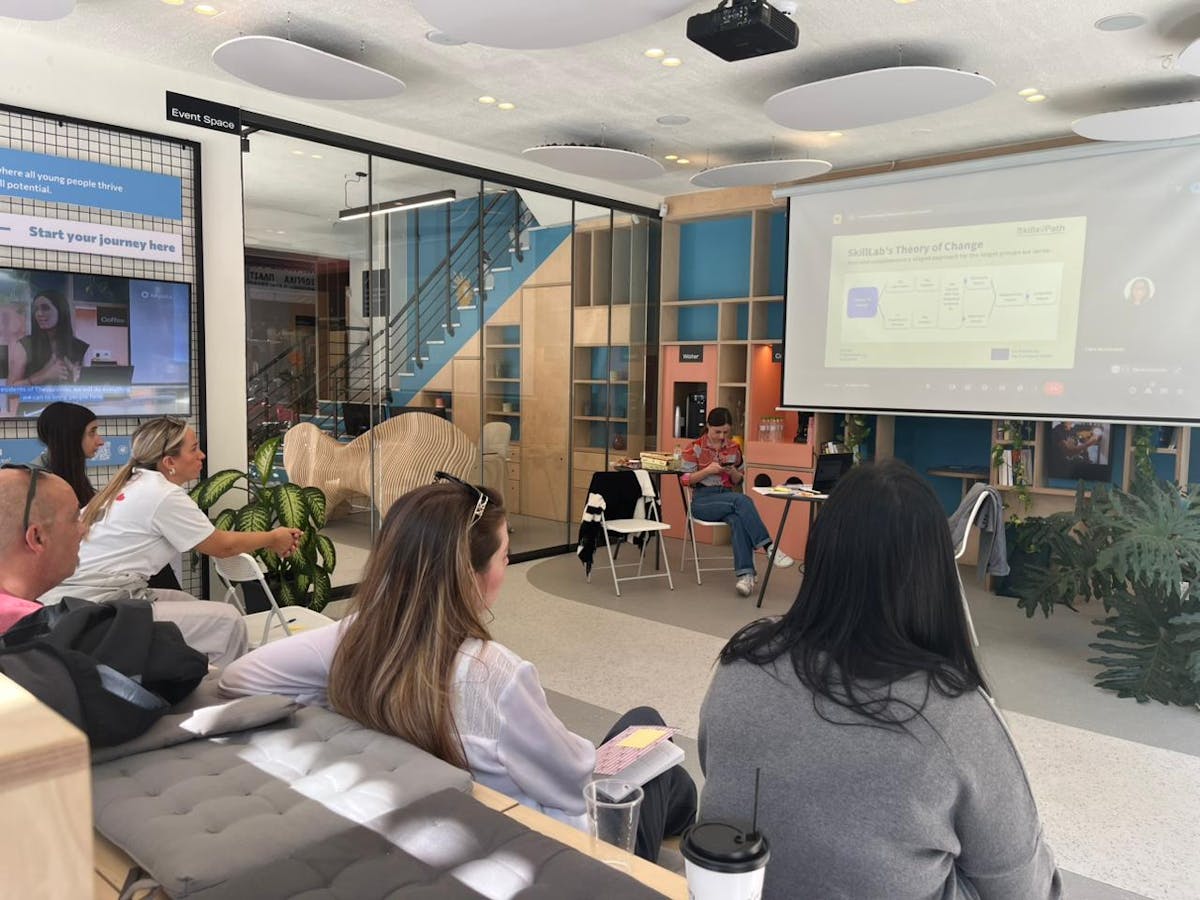
User Journey Design Lab in Thessaloniki, Greece.
Envisioning Lasting Impact
Our ambition for SkillsPath extends beyond immediate job placements. We aim to demonstrate that technology can be a powerful catalyst for social inclusion when integrated into human-centered services. We anticipate that the participating youth will achieve a significant career milestone, such as securing a job or enrolling in vocational training, with many entering the green sector.
Ultimately, we hope to validate a scalable model for social innovation that can be replicated across Europe. By sharing our learnings through a practical toolkit and engaging with key stakeholders, we aim to permanently enhance how employment services support vulnerable youth, ensuring that the future of work is accessible to everyone.
Follow our journey in the SkillsPath project from our LinkedIn page!

Featured image by Yan Krukau via Pexels.